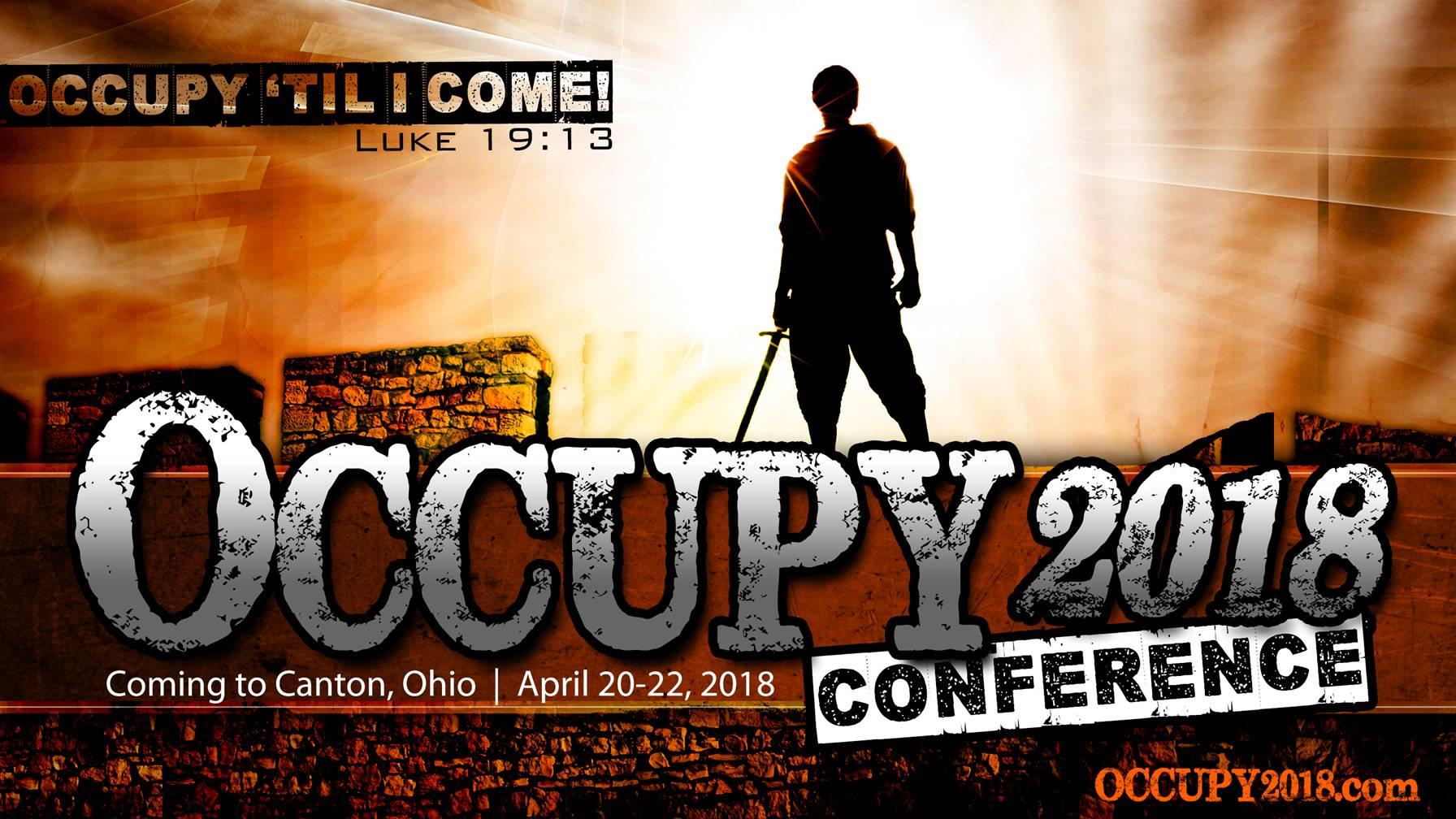
Join us in Canton to hear updates from Joe and Doug Hagmann, Jon Robberson, LA Marzulli, Russ Dizdar, Pastor Paul Begley, Pastor Mike Spaulding, Mark Trump, Bill Federer and Coach Dave.
Many events provide meaningful data on world events and biblical implications, but most of the time, event attendees leave all pumped up but find themselves all alone when they return home and are not able to further their personal growth with like-minded people. Occupy 2018 is an event that will encourage attendees to stay plugged into various processes (prayer groups, online training, podcasts, etc) to continue their walk in Christ.
The goal of the Occupy Til I Come Conference is to inform, guide, and connect like minded Remnant members and prepare them for the current and future spiritual battles ahead as time draws nearer to Christ’s return. (Luke 19:13)
What You Can Expect:
The Conference speaker topics will focus on standing and holding ground as Christians wherever you are.
Registrants will learn the calls to action to find training, websites, and material resources that will strengthen attendees in their personal walk and growth in truth.
The Conference Team will share with attendees tools to stay connected, access to weekly events (prayer teams, bible groups, online fellowship, podcasts, video streaming and physical fellowship)
Our aim is to connect attendees to multiple opportunities to take the fight to the enemy in areas all across the country.
Conference Dates: April 20-22, 2018
Location: Courtyard Canton Hotel, 4375 Metro Circle NW, Canton, OH (Block Rate- $89 plus tax- Click Here)
Reservations can also be made by calling 1-800-971-4768. Ask for Pass the Salt Ministries group rate.
Block rate available through March 21, 2018.
Local Area information:
- Canton – home of the Pro Football Hall of Fame . . . approx 5 miles away
- The hotel has a shuttle for airport guests
- Onsite restaurant
- Many restaurants of all levels within minutes of the hotel, easy access for lunch and dinner breaks
Airports: Akron-Canton Airport ( 5 minutes from Hotel), or Cleveland airport (30 miles- rental cars available)
Weekend Schedule: (Under Development)
Friday Start Time: 6 P.M.
Sunday Wrap-Up: 2 P.M.
 There can be little doubt that as a society we are experiencing both a profound lack of wisdom and a powerful level of adversity. In a time of trial, the robust and antifragile person must be able to recognize the signals that adversity provides. There is great meaning in being able to develop wisdom through adversity. How can we accomplish this feat while avoiding the undeniably potent capability of adversity to destroy wisdom? What do our worldviews suggest about how we should approach this