
Pagan Determinism and Christianity Part 2 – Augustine’s Gnostic Influence – Pastor Mike Spaulding

This is Part 2 of the series.

To summarize what the early church fathers and even Augustine himself taught until 412 A.D., Dr. Ken Wilson states:

The early Augustine’s traditional theology (My note – what orthodox Christianity taught at the time) pervasively asserts that humans can respond to God without divine assistance. “But miserable friends could be masters of this world if they were willing to be sons of God, for God has given them the power to become His sons” (On True Religion, 65). Contrary to the Manichaean misinterpretation of Ephesians 2:3 (“were by nature children of wrath” meaning at birth), Augustine denounced alienation from God by nature, “Remember what the apostle said, ‘In our lifestyle (behavior) we are alienated from God,’” and, “Augustine said: ‘I say it is not sin, if it be not sinned by one’s own will; hence also there is [a] reward, because of our own will we do right’” (Against Fortunatus the Manichaean, 21). Augustine clarifies that his free will statements concern current persons, not merely Adam’s original nature.[1]

Continue reading

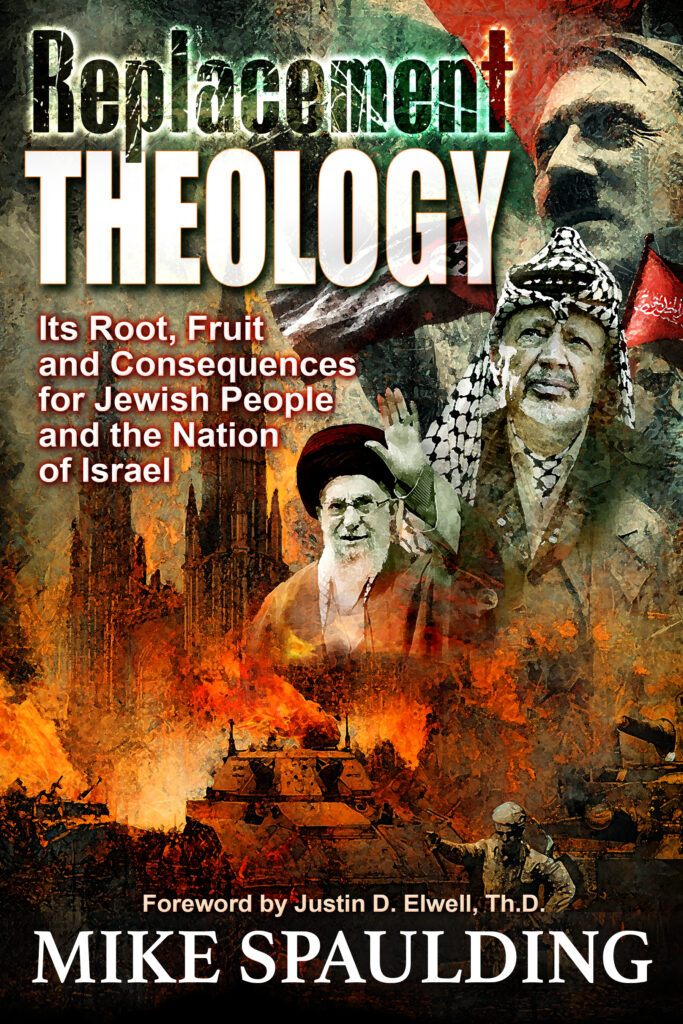
Replacement Theology: Its Root, Fruit, and Consequences for Jewish People and the Nation of Israel – NOW AVAILABLE

Excerpt:

What Replacement Theology as a system embraces is metaphysical personalism – a belief that Old Testament realities/promises are transformed/absorbed/dissolved in Christ. By doing this, Replacement Theology believes it is justified in discarding/eliminating God’s covenant promises to Israel and co-opting them to the church. This is a serious error. There is a direct cause-and-effect relationship between Replacement Theology/Supersessionism and antisemitism. Replacement Theology adherents can no longer hide from this conclusion. Nor should we allow them to do so. Any theology that leads to hating people, be they Jewish or otherwise, is a theology not worthy of our consideration and must be opposed.

We are at a pivotal point in history. How the church approaches Israel today will determine the impact it has on the earth in our day and until the return of Jesus. Israel remains an inescapable stumbling block for many Christians. This should not be the case. The church should be Israel’s biggest advocate. That it is not is a sad commentary. God’s eternal plan for Israel is intertwined with His plan for all the nations. Christians, above all people, should make it a pursuit to understand the biblical story of Israel and God’s plan for them in the future. Buckle up, friends, the ride is going to be bumpy for some.

AVAILABLE AT BOOKSELLERS EVERYWHERE

Pagan Determinism and Christianity Part 1 – Augustine’s Gnostic Influence

I have been teaching through the book of Ephesians recently. It has been a rich and satisfying study. One of the primary things I have discovered in researching and writing on Ephesians 2 is the role that Augustine (354-430) played in undermining orthodox Christian theology concerning the place of free will. He did this by mixing Gnostic determinism with his Christian theology. The result has been devastating as will be shown in this series of posts.

In Ephesians 2 Paul takes back up the subject of what Yahweh has done for us in Christ that he began earlier in this letter, and the result of Jesus’ willing sacrifice for us on Calvary. In returning to the subject of believers, Paul starts at the beginning in verse 1. He says rightly, that “you were dead in your trespasses and sins.” The KJV reads, “And you hath he quickened, who were dead in trespasses and sins;” “hath he quickened” is in italics to indicate those words are not found in the majority text from which the KJV translators worked and were added to the text by the translators. Unfortunately, this addition has created a problem for us today.

Continue reading

Christian America: Gog of Magog Is Not Russia

Current events demand that we understand what the Bible says in its prophetic passages. Many Christians are entertaining the idea that we are in the time of Ezekiel 38-39. Is that the case? Is Gog rising upon the earth? I don’t believe so as I will explain below.

The war of Gog and Magog is sometimes confused with the Battle of Armageddon. These two events are different for several reasons.

First, the war of Gog and Magog has a very focused theater of operations, namely Israel. The assembled armies come against Israel specifically and are destroyed by Yahweh Himself. Conversely, the battle of Armageddon is a worldwide conflict of the nations of the world assembled against Jesus Christ.

Continue reading

Hatred of Israel and the Jewish People Exposes Sharp Disagreement Among Churches – Dr. Mike Spaulding

A further heresy clouds premillennial interpretations of Scripture – their exultation of racism into a divine principle. Every attempt to bring the Jew back into prophecy as a Jew is to give race and works (for racial descent is a human work) a priority over grace and Christ’s work and is nothing more or less than paganism…There can be no compromise with this vicious heresy.[1]

In the last few days, I have had a discussion with other believers on a social media platform. That discussion has focused on the status of Israel both current and future. Specifically, the discussion centered on the differences between a Dispensational view of Israel and a Covenant Theology Postmillennial view of Israel.[2] One simple post that I made ignited a storm of counter-post responses. My post simply said, “Old Testament prophecies concerning Israel are not spiritually realized in the church. Two separate entities.” I expected “push-back” from some people due to their different views. Still, I did not expect to be called a blasphemer, false teacher, and enemy of Christ by others, who acted as if I had somehow denied Jesus by making a distinction between the church and Israel. What exactly has happened within the body of Christ that we have arrived at a place where calling other believers blasphemers is acceptable, especially over things that there is wide disagreement about?

Continue reading